I Tracked My Sleep for 8 Weekends: This App Finally Fixed My Morning Fatigue
Ever woken up after a weekend of “rest” still feeling drained, like your brain hit a wall before noon? I did—every Saturday and Sunday for months. I tried everything: early bedtimes, no screens, even herbal teas. Nothing stuck. Then I found a simple video-guided sleep app that didn’t feel like another chore. It didn’t promise miracles, but by Sunday morning, I was actually refreshed—ready to cook with my kids, focus on a hobby, or just *be* present. This is how one small tech shift changed my weekends—and my life.
The Weekend That Wasn’t Restful
For years, I thought weekends were supposed to recharge me. I’d tell myself, “Just sleep in Saturday morning. You’ve earned it.” But time and again, I’d wake up late, groggy, and somehow more tired than when I went to bed. The sun would be high, the house quiet, and instead of feeling renewed, I’d feel guilty. Guilty for wasting the morning, for not starting that recipe I’d saved, for not taking the kids to the park while the weather was nice. I’d scroll through my phone, hoping inspiration would strike, but my mind felt foggy, slow, like it hadn’t fully turned on.
At first, I blamed myself. Maybe I wasn’t trying hard enough. Maybe I needed more discipline. But the harder I pushed, the worse it got. I’d go to bed early on Friday, determined to “get it right,” only to lie awake, overthinking the week that had passed or the one coming up. Or I’d sleep too long and wake up with a headache, disoriented, like I’d missed not just hours, but part of my life. I started to dread weekends almost as much as Mondays—because the pressure to relax was just as heavy as the pressure to perform.
What I didn’t realize then was that rest isn’t automatic. Just like you can’t force a plant to grow by watering it nonstop, you can’t force your body to recover by simply doing nothing. Real rest requires intention. It’s not about how much time you spend in bed, but how well you prepare your mind and body to receive sleep. My weekends weren’t failing me—my routine was. I was treating rest like a reward for surviving the week, instead of a practice I could nurture every day. Without structure, my downtime became a free-for-all: too much screen time, too much caffeine, too much mental clutter. I wasn’t recovering—I was just pausing, and poorly.
Discovering a Different Kind of Sleep App
I’d downloaded sleep apps before. Most promised to track my sleep cycles, measure my heart rate, or play generic white noise. Some gave me reports full of data—deep sleep percentage, REM duration, movement frequency—but none of it meant much to me. I’d stare at the numbers, feeling more confused than informed. Was 58% deep sleep good? Was waking up twice during the night normal? The apps made me feel like I was failing a test I never signed up for.
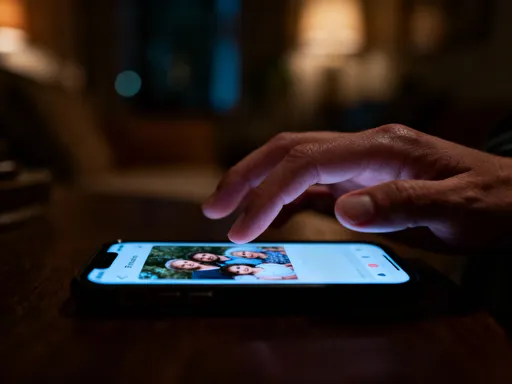
Then, by accident, I found an app that didn’t look like a lab report. It wasn’t full of graphs or notifications. Instead, it offered short, guided videos—five to fifteen minutes long—designed to help you wind down. The interface was simple, almost cozy. Soft colors, gentle voiceovers, and real people (not animated avatars) leading calming exercises. One video was called “Letting Go of the Week,” another “Softening Into the Weekend.” I clicked on one out of curiosity, not expectation.
It started with a woman sitting in what looked like a sunlit living room, speaking slowly, warmly. “You don’t have to do anything in these next few minutes,” she said. “Just listen. Let your hands rest. Let your breath find its own rhythm.” There was no pressure to “get it right.” No timers, no scores. Just presence. I followed along as she guided me through a simple body scan, inviting me to notice tension without trying to fix it. When the video ended, I didn’t feel like I’d accomplished anything—but I felt *lighter*. For the first time in weeks, my mind wasn’t racing. I went to bed not because the app told me to, but because I actually *wanted* to.
That was the difference. This wasn’t a tool to monitor me—it was a companion to guide me. It didn’t treat sleep as a performance metric. It treated it as a human experience. And because it felt so natural, so kind, I kept coming back. Not because I had to, but because I *wanted* to. That’s when I realized: maybe the reason other apps failed me wasn’t because they were bad—they just didn’t speak my language. This one did.
How Weekend Evenings Changed with 15-Minute Rituals
The app didn’t ask for hours of my time. Most of the videos were just 10 to 15 minutes long, designed to fit into the small windows of evening calm. I started using them on Friday and Saturday nights, right after dinner, before the kids’ bedtime routine. I’d dim the lights, put on headphones, and press play. No screens, no distractions—just me and the voice on the other end, gently guiding me into stillness.
One of my favorites was called “Digital Sunset.” It walked me through a five-step process to disconnect from the week: closing my laptop, turning off work notifications, writing down any lingering thoughts in a notebook, and then doing a short breathing exercise. “Imagine each exhale is releasing the weight of the past seven days,” the instructor said. “You don’t need to carry it into the weekend.” It sounds simple, but that ritual changed everything. For the first time, I wasn’t bringing Monday’s stress into Saturday. I was creating a boundary—one I didn’t even know I needed.
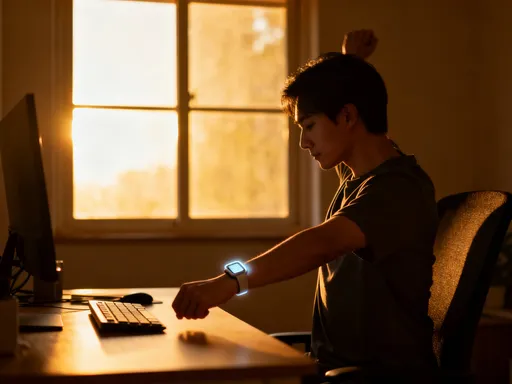
Another video focused on gentle movement. It wasn’t a workout—no jumping, no sweat. Just slow stretches, seated twists, and shoulder rolls, all narrated in a soothing tone. “Your body has held tension all week,” the instructor reminded me. “This isn’t about fixing it. It’s about acknowledging it.” I’d do this while my husband read to the kids in the next room. Afterward, I didn’t feel exhausted—I felt *unwound*. My shoulders dropped. My jaw relaxed. I could actually feel the difference.
My partner noticed it too. One night, he said, “You seem… calmer. Like you’re actually *here* now.” That hit me. Because for so long, even when I was physically present, my mind was elsewhere—planning, worrying, replaying conversations. These short rituals didn’t take time away from my family. They gave me back to them. I wasn’t just surviving the weekend—I was *in* it. And that made all the difference.
Waking Up with Purpose, Not Pressure
Sunday mornings used to be the worst. I’d wake up late, already dreading the week ahead. My mind would race: emails piling up, meetings scheduled, to-do lists growing. I’d reach for my phone before my feet hit the floor, scrolling through work messages like I was checking for damage. By 9 a.m., I was already stressed—on a day that was supposed to be restful.
The app had a section for mornings, too. Short videos—just five minutes—focused on breathing, gratitude, and setting an intention. I started using one called “Morning Light” every Sunday. It began with soft music and a simple instruction: “Before you reach for your phone, take three slow breaths. Let your body wake up at its own pace.” Then the voice would guide me through a brief reflection: “What’s one thing you’re looking forward to this week? Not a task—something that brings you joy.”
The first time I tried it, I almost cried. Because I couldn’t think of anything. Not one thing. That broke my heart. When did my life become so heavy that even the idea of joy felt out of reach? But the video didn’t judge. It just waited. And eventually, I whispered, “I’m looking forward to baking cookies with my daughter.” It wasn’t grand. It wasn’t productive. But it was true.
What surprised me most was that my kids started joining me. They’d crawl into bed, snuggle under the blanket, and listen quietly as the video played. No talking. No screens. Just us, breathing together. That five-minute ritual became our new Sunday tradition—more meaningful than any family brunch or outing. I wasn’t just starting my day differently. I was starting my week with *clarity*, not chaos. And that calm carried through—into Monday, into meetings, into moments when I used to snap at my kids out of stress.
Learning Sleep, Not Just Tracking It
Most sleep apps treat you like a machine: input sleep, output data. But this one treated me like a person. It had short educational videos—like mini-lessons—explaining how sleep actually works. One explained why sleeping in on weekends can *worsen* fatigue by disrupting your circadian rhythm. Another broke down the stages of sleep in a way that made sense: light sleep, deep sleep, REM, and how each plays a role in recovery.
I remember watching one called “The Myth of the Catch-Up Nap.” The instructor, a woman with a calm voice and kind eyes, said, “Sleep isn’t like a bank you can overdraw and then deposit into later. Your body thrives on consistency.” That hit me. I’d been treating sleep like a debt I could repay in one long weekend binge. But my body didn’t work that way. It needed rhythm, not rescue.
The app didn’t demand perfection. Instead, it encouraged small shifts. One video suggested going to bed just 15 minutes earlier on Saturday, then 15 more on Sunday. “Let your body adjust slowly,” it said. “Rest isn’t a sprint. It’s a practice.” I followed the advice, not rigidly, but gently. Some weekends I still stayed up late. But now, when I did, I didn’t beat myself up. I just returned to the routine the next night.
What changed wasn’t just my sleep—it was my relationship with it. I stopped seeing rest as something I had to earn or force. I started seeing it as something I could *cultivate*. And that shift—from guilt to understanding, from pressure to patience—was the real breakthrough.
A Ripple Effect on My Weekly Life
I didn’t expect one weekend habit to change my entire week. But it did. With real rest on Saturdays and Sundays, I wasn’t starting Monday depleted. I had energy—not just physical, but emotional. I was more patient with my kids. I listened better. I didn’t snap over spilled milk or forgotten homework. At work, I focused more easily. I didn’t feel the afternoon crash at 3 p.m. I even started cooking again—simple meals, but with joy, not obligation.
One evening, my daughter looked up from her plate and said, “Mom, you seem happier lately.” That stopped me. Because I *was* happier. Not because my life was easier—but because I wasn’t carrying the weight of constant exhaustion. I had space to breathe, to laugh, to be present. I wasn’t doing more. I was *being* more.
The app didn’t solve every problem. Life still had stress. Deadlines still loomed. But now, I faced them from a place of strength, not survival. I had a foundation. And that made challenges feel manageable, not overwhelming. My confidence grew—not because I was more productive, but because I felt more like *myself*. That’s the gift of real rest: it doesn’t change your circumstances. It changes how you move through them.
Why This Isn’t Just Another Tech Fix
In a world full of apps that promise to optimize every part of your life, this one felt different. It didn’t sell me on productivity. It didn’t tell me to “hack” my sleep or “maximize” my downtime. It didn’t add more to my plate. It helped me *step back* from it.
What made it work wasn’t the technology—it was the *humanity* behind it. The videos weren’t robotic. They were led by real people who spoke with warmth, empathy, and understanding. They didn’t shame me for sleeping in or missing a night. They reminded me that rest is personal. That it’s okay to move slowly. That healing isn’t linear.
Video-based learning made the difference. Watching someone guide me through a breathing exercise felt more real than reading instructions or listening to a voice alone. I could see their calm expression, their relaxed posture. It wasn’t just information—it was *embodiment*. And that helped me embody it too.
In the end, this wasn’t about finding the perfect app. It was about finding a way to reconnect with my own rhythm. Technology didn’t fix me. It simply gave me the space, the guidance, and the permission to rest—*really* rest—in a way I hadn’t allowed myself in years. And that small shift didn’t just change my weekends. It changed how I live, how I love, and how I show up in the world. Sometimes, the most powerful tech isn’t the one that does more—it’s the one that helps you do less, and feel more.