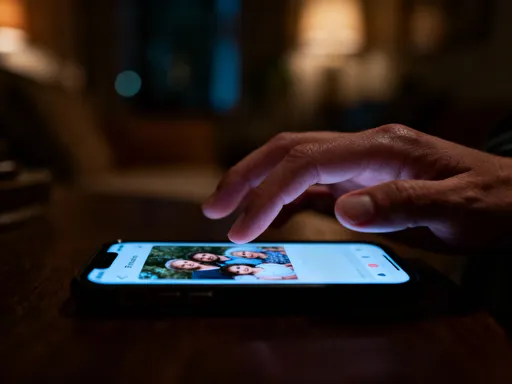
Tired of Starting Strong and Fizzling Out? This App Keeps Your Goals Alive Every Day
We’ve all been there—excited to learn something new, only to lose momentum after a few days. You download a course, set big intentions, but life gets busy. The truth is, it’s not your fault. What if there was a simple way to stay on track without pressure or guilt? I found an app that checks in with me like a thoughtful friend, and it’s changed how I grow—without the burnout. It doesn’t push me to do more. It just asks, gently, how I’m doing. And somehow, that small question keeps me showing up, even when I don’t feel like it. That’s the magic I want to share with you today.
The Morning Struggle: When Motivation Fades Before Coffee Cools
Picture this: it’s Tuesday morning, and your kitchen is alive with the usual rush. The kids are arguing over cereal, the dog needs a walk, and your phone buzzes—not with a work email, but with a soft notification from an app you almost forgot about. It says, “Hey, how’s your Spanish practice going?” You pause. Your mug is still warm. You haven’t opened the language lesson in three days. That familiar pang hits—not frustration, not anger, just a quiet whisper of disappointment in yourself. You meant to do better. You really did.
But here’s what I’ve learned: that moment isn’t about failure. It’s about being human. We set goals with fire in our hearts, but life doesn’t pause for self-improvement. Laundry piles up. Meetings run late. Someone gets sick. And suddenly, that dream of learning to paint, writing a novel, or finally mastering your budget slips to the bottom of the list. The problem isn’t that we lack willpower. It’s that we lack support. We need something—or someone—that remembers our goals when we’re too tired to remember them ourselves.
That’s where this kind of app steps in. It doesn’t scold you. It doesn’t show a red progress bar or a harsh “0% complete” warning. Instead, it shows up like a friend who knows you’re trying. It doesn’t demand a big update. It just asks, “How are you doing with that thing you wanted to learn?” And in that question, there’s kindness. There’s continuity. It keeps the thread of your intention alive, even when life pulls you in ten directions at once.
What If Your Phone Cared About Your Growth?
Most apps we use are built to track performance. Fitness apps count your steps. Language apps measure your streaks. Budgeting tools show your spending in red or green. They’re useful, sure, but they can also make us feel like we’re being graded. Miss a day? The streak breaks. Fall behind? The dashboard frowns at you. Over time, that pressure can make us shut down. We stop opening the app not because we don’t care, but because facing that judgment feels too heavy.
But what if your phone didn’t act like a teacher with a red pen, but like a friend with a listening ear? That’s the idea behind check-in apps. They’re designed with simplicity and empathy in mind. Instead of dashboards and data, they send you a message—maybe once a day, maybe every other day—asking something like, “How did your journaling go?” or “Did you get a chance to think about your goals today?” There’s no quiz. No timer. No score. Just space to respond, in your own words, in your own time.
These apps are rooted in behavioral science, though you’d never know it from using them. They use gentle prompts to build consistency, not through pressure, but through connection. Psychologists call this “habit stacking” and “positive reinforcement”—but in real life, it feels like someone remembering what matters to you. When you reply, even with a simple “not yet,” the app acknowledges it. That small act of recognition makes you more likely to try again tomorrow. It’s not about perfection. It’s about presence. And presence, over time, becomes progress.
The Power of Tiny Daily Promises
Let’s talk about why big goals often fail. We say, “I’ll learn piano,” and we imagine ourselves playing beautiful songs. But then we sit down, and the sheet music looks impossible. Our fingers fumble. We compare ourselves to videos online and feel discouraged. So we close the app and tell ourselves we’ll try again “when we have more time.” But that time never comes. The dream fades, not because we stopped wanting it, but because it felt too far away.
Here’s the secret I discovered: small promises work better than big resolutions. Instead of committing to “practice piano for 30 minutes,” my app lets me say, “I listened to the lesson.” That’s it. No pressure to perform. No expectation of mastery. Just showing up in some way. At first, I felt silly. “Does just listening really count?” I wondered. But the app treated it like a win. It replied, “Thanks for checking in. That’s a great start.” And something shifted. I began to feel like I wasn’t failing. I was participating.
Over time, those tiny commitments added up. Because I wasn’t overwhelmed, I kept coming back. Some days, I did play a few notes. Other days, I just watched a tutorial. But every time I checked in, I reinforced the habit. My brain stopped seeing piano as a mountain and started seeing it as a path—one I could walk at my own pace. The app didn’t teach me music. It taught me how to be kind to myself while learning. And that, more than any scale or chord, was the real breakthrough.
More Than a Reminder: It’s Emotional Support in Your Pocket
Here’s what surprised me most—this app doesn’t just ask, “Did you do it?” It asks, “How did it feel?” That one little shift changes everything. Instead of focusing on whether I completed a task, I started paying attention to how I felt about trying. Some days, I’d reply, “I was tired, but I’m proud I didn’t give up.” Other days, “I felt frustrated, but I’ll try again tomorrow.” And the app didn’t judge. It just said, “Thank you for sharing. That sounds tough. I’m here.”
It sounds simple, but that emotional check-in made a huge difference. For years, I thought personal growth was about pushing through discomfort. I believed that if I just worked harder, I’d get there. But this app taught me that awareness matters just as much as action. By naming how I felt, I started to understand my patterns. I noticed that I was more likely to skip practice after a stressful day at work. I realized that I felt more confident when I checked in at the same time each day. That self-awareness helped me adjust, not criticize.
It’s like having a journal with a soul. When you write alone, it’s easy to spiral into self-doubt. But when you share your thoughts with something that responds with care, it feels different. You feel seen. You feel supported. And that emotional safety makes it easier to keep going, even when progress feels slow. I didn’t expect an app to help me feel less alone in my goals. But it did. And that connection—however small—became a quiet anchor in my day.
Making It Work for Real Life: No Perfect Schedules Needed
One of the biggest myths about self-improvement is that you need a perfect routine. We see influencers with their 5 a.m. workouts and color-coded planners and think, “If only I had that kind of time.” But real life isn’t like that. We have sick kids. We work late. We forget things. And when our plans fall apart, we feel like we’ve failed. But here’s the truth: growth doesn’t require perfection. It requires flexibility.
That’s why I love how these check-in apps adapt to real life. They don’t assume you’ll check in at 7 a.m. every day. They send reminders at different times. Some let you schedule your own check-in window. Others let you reply with voice notes, photos, or even emojis. When I was traveling for my sister’s wedding, I didn’t have time to write. But I could record a quick voice message: “Hey, I didn’t practice piano this week, but I listened to a piece I love on the plane. Feels good to keep the dream alive.” And the app accepted it. No guilt. No penalty. Just space to be honest.
This flexibility made all the difference. I stopped seeing missed days as failures and started seeing them as part of the journey. The app didn’t shame me for being busy. It honored my effort, however small. And that made me more likely to return, not out of obligation, but out of trust. I knew it wouldn’t punish me for being human. It would just be there, waiting, with a gentle question: “How are you doing with your goal today?” And that consistency, more than any rigid schedule, kept me moving forward.
Sharing Growth Without the Pressure to Perform
One feature I didn’t expect to love was the option to share my check-ins with someone I trust. I invited my sister, who’s also trying to learn watercolor painting. We didn’t set up a competition. We didn’t compare streaks or progress. Instead, we just let each other see our daily replies. Sometimes, she’d write, “Today was hard, but I mixed one new color.” I’d smile and think, “Me too. Some days, just showing up is the win.”
What surprised me was how this small act deepened our relationship. We didn’t talk about our goals much before. Now, we text each other, “Saw your check-in today—so proud of you!” It’s not about proving anything. It’s about knowing someone else sees your effort. That quiet acknowledgment means more than praise. It creates a sense of shared journey. We’re not racing to the finish line. We’re walking side by side, at our own pace, cheering each other on in the quiet moments.
And here’s the beautiful part: because there’s no pressure to perform, we’re more honest. We share our struggles, not just our wins. We say, “I didn’t do it,” and “I’m tired,” and “I need a break.” And instead of judgment, we get understanding. That emotional honesty strengthens our bond and makes our growth feel more real. It’s not about looking good. It’s about being real. And in a world that often celebrates only success, that’s a rare and precious thing.
A Smarter, Kinder Way to Become Who You Want to Be
After using this app for months, I’ve noticed a shift—not just in what I’m learning, but in how I see myself. I used to measure progress by how fast I improved. Now, I measure it by how gently I treat myself along the way. I used to beat myself up for missing a day. Now, I ask, “What do I need to make tomorrow easier?” That change didn’t happen overnight. It grew from hundreds of small check-ins, each one reminding me that I’m still trying. And that, in itself, is something to celebrate.
These apps won’t make you fluent in a language in a week. They won’t turn you into a coding expert overnight. But they will help you stay connected to your goals, day after day, even when life gets loud. They replace guilt with grace. They trade pressure for presence. And they teach you that real growth isn’t about how fast you go—it’s about how consistently you return.
Because here’s the truth: becoming who you want to be isn’t a sprint. It’s a series of quiet choices. It’s the decision to reply, even when you’ve done nothing. It’s the courage to say, “I’m tired,” and still show up tomorrow. It’s the small voice in your phone that says, “I remember what matters to you,” on the days when you’ve forgotten.
So if you’ve ever started strong and faded fast, know this: it’s not you. It’s the system. And now, there’s a better one—one that walks with you, not ahead of you. One that doesn’t shout for attention, but whispers, “I’m here.” Because real progress isn’t loud. It’s the quiet “I’m still here” that matters most. And sometimes, all we need is someone—or something—to help us say it, one day at a time.